

Everything You Need to Know About Disc Herniations
Disc herniations and bulges are the most common condition we see in the office, no question. Intervertebral discs are crucial for spine function, but they can become damaged over time due to age, injury, or wear and tear. This can lead to problems like herniated discs, where the inner gel leaks out and presses on nearby nerves, causing pain, numbness, or weakness. They can occur anywhere in the spine, although they occur most frequently in the low back and neck. We get a lot of questions about what's the difference between a bulge and herniation, how they occur, and how to best treat it. In this article we are going to discuss the answers to all those questions and more.
What is an Intervertebral Disc?
An intervertebral disc is a soft, cushion-like structure located between the bones (vertebrae) of your spine. These discs act as shock absorbers, helping your spine stay flexible and allowing you to bend, twist, and move without the bones grinding against each other.
Each disc has two main parts:
- Nucleus pulposus – This is the soft, gel-like center that provides cushioning and absorbs pressure.
- Annulus fibrosus – This is the tough, outer ring made of strong fibers that keeps the gel-like center in place.
Imagine a jelly donut: the jelly inside is like the nucleus pulposus, and the dough is the annulus fibrosus.
Disc Bulge vs. Disc Herniation
The terms disc bulge and disc herniation are often used interchangeably, but they describe different levels of spinal disc damage. Here's the key difference:
Disc Bulge:
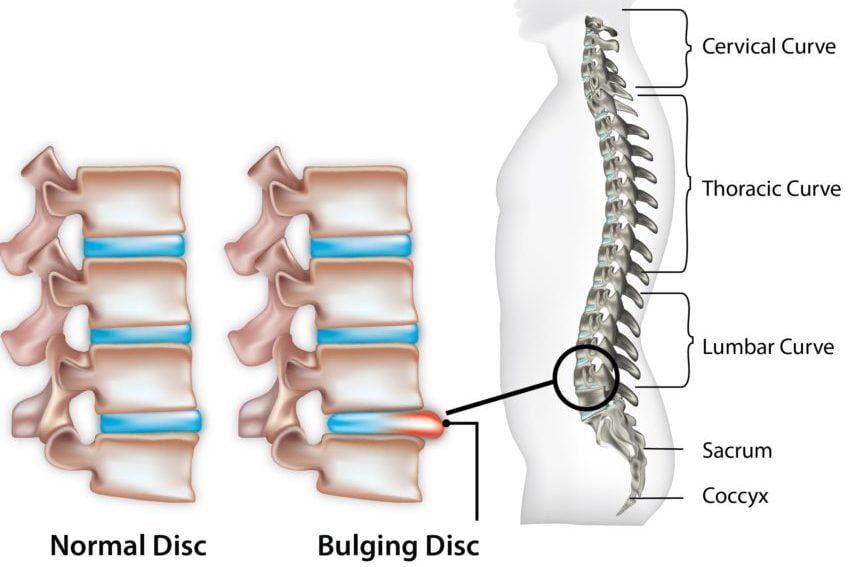
- A disc bulge is when the outer layer of the intervertebral disc (called the annulus fibrosus) extends outward beyond its normal boundary.
- It usually affects a broad area of the disc, and the disc maintains its overall shape—it’s just a little “puffed out.”
- Think of it like a car tire that's slightly overinflated but not torn.
- Bulges are often degenerative and may not cause symptoms unless they press on a nerve.
Disc Herniation:
- A disc herniation (also called a slipped or ruptured disc) happens when the inner gel-like material (nucleus pulposus) leaks out through a tear or crack in the outer layer.
- This is usually more focal and can put more direct pressure on spinal nerves, often causing pain, numbness, or weakness.
- Think of it like jelly squeezing out of a doughnut.
If your spinal discs were water balloons, a bulge is a balloon getting squished and bulging out, but still whole. A herniation is when the balloon pops and the water spurts out.
How Do They Occur?
The causes of disc bulges and disc herniations overlap in some areas, but there are important differences in mechanism, risk factors, and severity. Here's a clear breakdown:
Disc Bulge Causes
A disc bulge usually develops gradually over time as part of the natural aging process and disc degeneration.
Degenerative Disc Disease: Aging leads to loss of water content and disc elasticity, causing the disc to flatten and bulge outward.
Repetitive Stress: Prolonged poor posture or repetitive activities (like lifting or bending) can stress the spine.
Genetics: Some people are genetically more prone to early disc degeneration.
Obesity: Excess weight increases pressure on spinal discs.
Sedentary lifestyle: Weak spinal muscles reduce disc support and stability.
Think of a disc bulge like a balloon slowly over-inflating over years due to wear and pressure.
Disc Herniation – Causes
A disc herniation is often a sudden event involving a tear in the disc’s outer layer, allowing inner material to push out.
Common Causes:
Acute Trauma or Injury: Lifting something heavy with poor form or a sudden twist can cause a disc to rupture.
Chronic Strain: Long-term stress on a degenerated disc can cause the outer layer to eventually fail.
Disc Bulge Progression: A bulging disc can worsen and herniate if enough pressure is applied.
Smoking: Reduces blood flow to discs, speeding up degeneration and weakening tissue.
Vibration Exposure: Jobs involving heavy machinery or driving can increase spinal disc pressure.
What are the Treatments for Disc Bulge or Disc Herniation?
Treatment for a disc bulge or disc herniation typically begins with the most conservative, least invasive options and progresses only if symptoms persist or worsen. The only time you should skip steps is an emergency or severe traumatic injury. Seek urgent care if you experience loss of bladder/bowel control, severe or progressive weakness, or numbness in the groin or inner thighs (saddle anesthesia). These could indicate cauda equina syndrome, a rare emergency that could lead to permanent nerve symptoms.
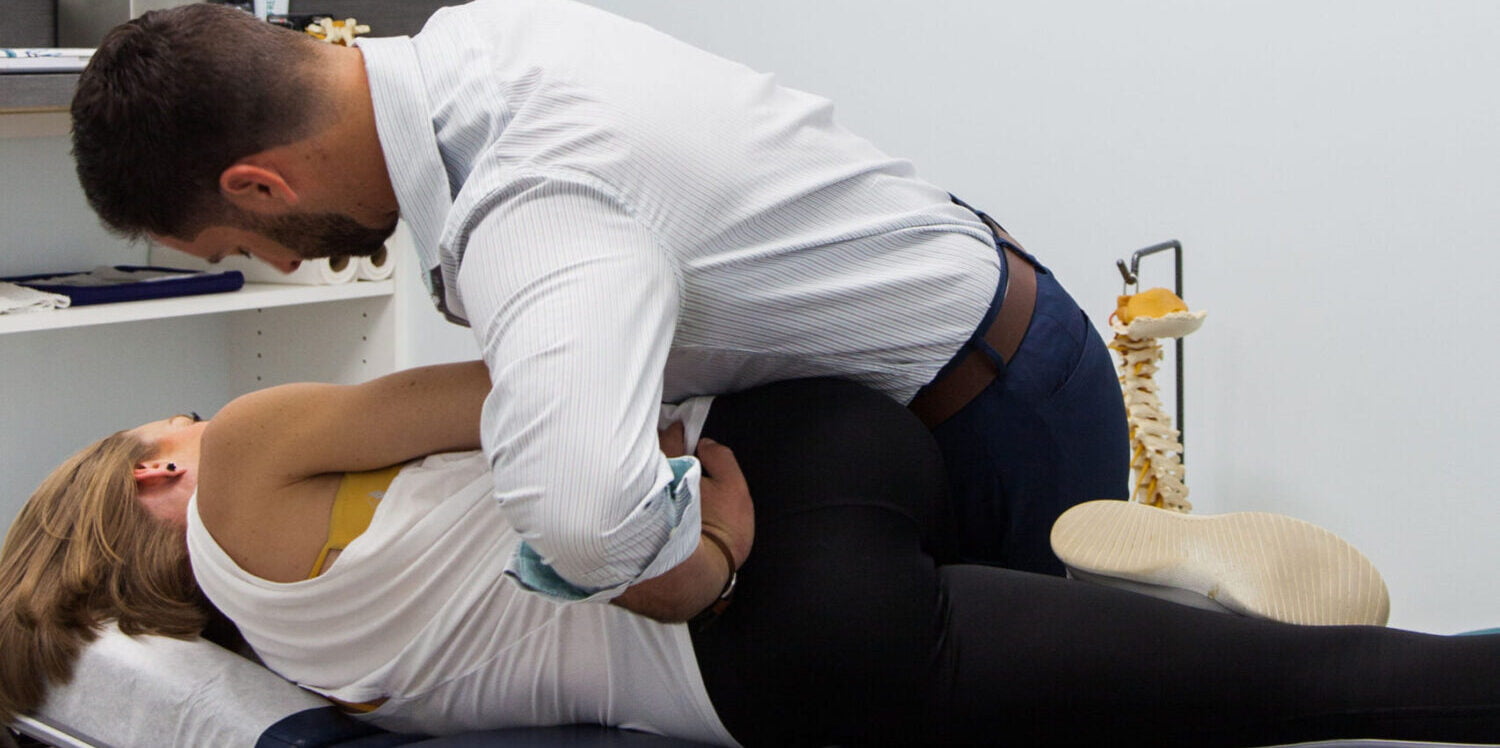
Over-the-counter medications like ibuprofen, naproxen, or acetaminophen are commonly used to manage pain and inflammation early on. In many cases, chiropractic with a rehabilitative exercise program is one of the most effective conservative treatments. Therapists focus on strengthening the core muscles, improving flexibility, teaching proper body mechanics, and using targeted approaches like the McKenzie Method to relieve pressure on spinal nerves. We may perform spinal adjustments or use decompression therapy to reduce disc pressure and improve spinal function. The timeline for relief is on the scale from weeks to months. with an average of about 8 weeks for complete resolution.
If these measures are insufficient, doctors may prescribe medications such as muscle relaxants for spasms, oral corticosteroids to reduce inflammation, or neuropathic pain medications like gabapentin or pregabalin for nerve-related symptoms. When pain continues despite these interventions, spinal injections may be considered. Epidural steroid injections or selective nerve root blocks deliver anti-inflammatory medication directly to the affected area to reduce nerve irritation. These don’t fix the underlying issue but can provide relief long enough to benefit from chiropractic and physical therapy.
If conservative care fails after several weeks or if the patient experiences significant nerve symptoms, surgery might be considered. Minimally invasive procedures like microdiscectomy or endoscopic discectomy can remove the portion of the herniated disc pressing on a nerve through small incisions. For more severe or complex cases, traditional open surgery such as a laminectomy or even spinal fusion might be necessary, though these involve longer recovery times and more risk.
Ultimately, most people improve without surgery, and the goal is always to start with the least invasive treatment and escalate only as needed. The vast majority of patients (~95%) are able to get relief through chiropractic or physical therapy.
If you or someone you know is dealing with a disc bulge or disc herniation, get in touch with our office and we'd be happy to discuss options for getting you out of pain and back to doing what you love as quickly as possible.
