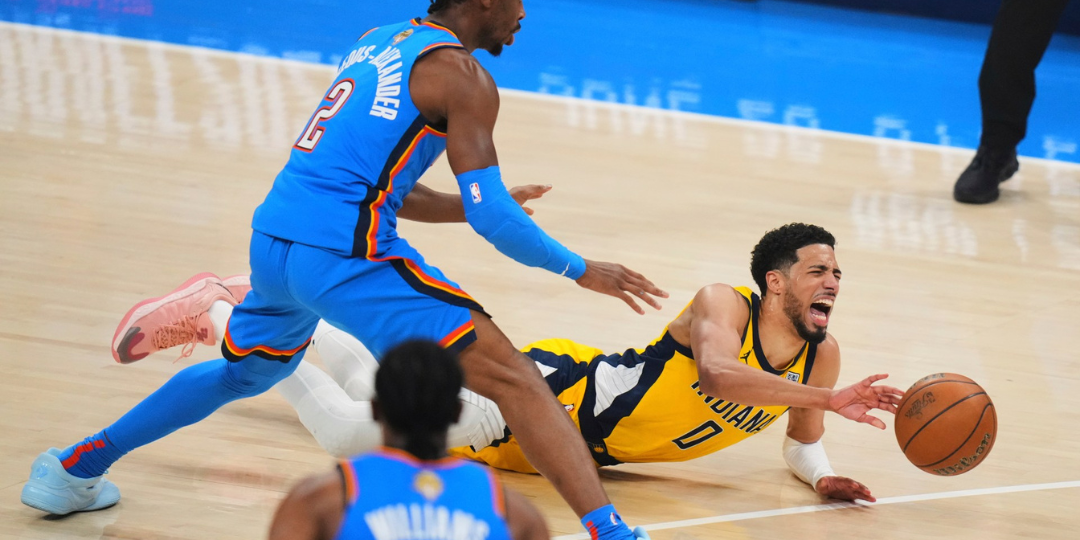
Tyrese Haliburton tearing his Achilles tendon

Are Achilles Tendon Ruptures on the Rise?

Tyrese Haliburton now joins a growing list of elite young athletes with Achilles tendon ruptures—Cam Akers, Kevin Durant, Klay Thompson, and even Aaron Rodgers later in his career. What are we missing? Is this load mismanagement, modern footwear, poor surface quality, strength-to-stiffness mismatches, fascial chain issues, or something upstream in the kinetic chain that isn’t getting enough attention?

Let's explore the factors of what leads to Achilles injuries and why we are seeing what appears to be an increased prevalence of Achilles tendon ruptures in today's modern athletes.

Previous Injury

Let's start with the facts. Tyrese Haliburton actually dealt with a calf strain earlier in the season and it flew a bit under the radar. I think we tend to brush off calf strains as minor or “nuisance” injuries, but maybe they’re more of a red flag than we give them credit for. If the calf–Achilles complex is already under tension and not fully recovered, it makes sense that we’d see a progression to rupture, especially in high-force, high-velocity athletes. You can't cheat biological healing time. We should stop treating them as wimpy and start treating them as warning lights.

Recovery & Nutrition

Poor nutrition & recovery is often overlooked and unfortunately very common in professional sports. Here's a fact: athletes who sleep 8 hours per night are 50% less likely to get injured. That is a staggering statistic that is one of the easiest things to implement. I think a lot of athletes, professional and amateur alike, are constantly looking for the next bio-hack, nutritional supplement, or tech toy to give them an extra boost when it comes to performance. But all those things pale in comparison to the most important basics: proper diet and rest. Eat clean, get a full night's rest, and don't worry so much about red light therapy and cold plunges until those other things are well taken care of.

What do I mean by proper diet? I don't mean paleo, ketogenic, carnivore, or other fad diets. I don't mean "detox" programs or fasting. Eat real food. Get enough calories without exceeding your needs. Carbs are a performance-enhancing drug. Your brain requires them to function. You need to be getting enough of each macro-nutrient (carbohydrates, proteins, and fats) to have a balanced diet. Eat a wide variety of whole foods. Avoid alcohol and junk-food. It's not super complicated.
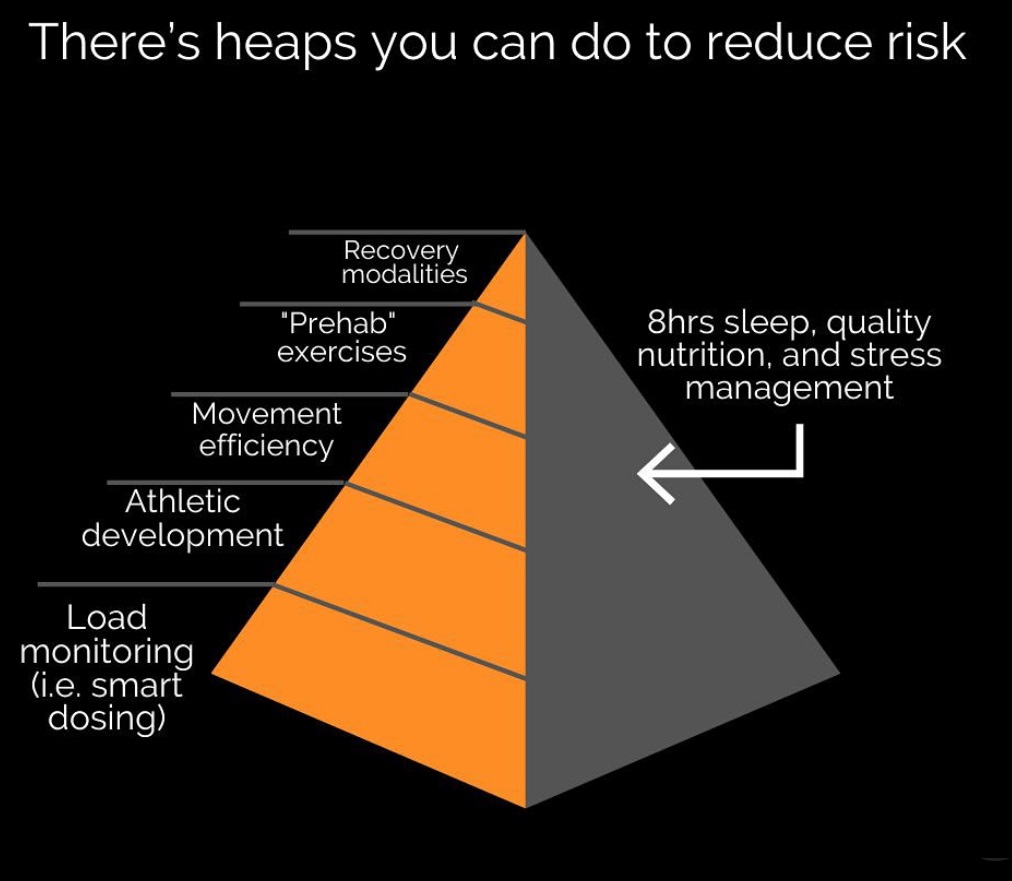
Injury risk reduction

Pharmaceutical Intervention

Unfortunately the majority of people, athletes included, often use pharmaceutical intervention as a first line of defense. While there are incredible benefits to the miracles of modern medicine, they are not without side effects and risks. One of the most common orthopedic procedures performed on injuries is the use of injectable corticosteroids. Corticosteroids have a known risk of weakening tendons. That means you are far more likely to experience a muscle or tendon tear after receiving a steroid injection. The patient will often feel a reduction in pain and return to normal activity, risking injury. For an athlete who is training and performing at a high level, this risk is exacerbated.

Another often ignored risk is that of Fluoroquinolone antibiotics. This class of drug carries the same risk and has increased incidence of tendon rupture. While I can't speak to these specific athletes cause of injury, this is a possible risk factor that should not be ignored but often is not realized.

Footwear & Ground Mechanics

Footwear, especially in basketball and football, has become so protective that it's led to weakness in deep intrinsic foot musculature. Athletes aren't developing enough foundational strength and motion from the ground up. From a training standpoint, many coaches have moved away from tried-and-true principles. In the rush to adopt the latest trends or technologies, fundamental movement patterns and progressive loading strategies are being neglected.
In football, turf is notoriously unforgiving, and cleats bite in too aggressively. Injury rates are higher when teams play on turf. In basketball, shoes act almost like a cast, restrictive and overly supportive, which limits natural foot and ankle mechanics.

Conclusion

So what have we learned?

Calf strain + explosive athlete + intense competition + poor recovery = no Achilles. I think the single most important factor is lack of recovery. Hailburton took the risk during the NBA finals of playing on an injured calf and unfortunately suffered a known possible fate. I don't think a change in training methods or exercise regimen would have prevented this once the injury was present.

I want to issue a caveat that I am not intending to diagnose this specific case. It just made me consider the different factors that can lead to this specific injury. There are too many unknown variables in all these cases to say anything with certainty. We can speculate all day, but each injury has its own set of circumstances and the people surrounding these athletes are the only ones who can answer these questions. In every case, a proper evaluation is necessary to truly know the cause of the injury.

Alex Wasserman DC

Owner and clinical director of Tidal Chiropractic. Sports chiropractor, musician, and kayak fisherman. Husband to Dr. Shanele Lundahl and dad of Archie.

We are closed until August 17! See you then!

X