

5 Myths About Chiropractic
Sometimes, I'll hear a comment or question from a patient, or even another doctor, that makes me scratch my head. "Where did you hear that?" I wonder. Over the years I've heard some pretty interesting and outlandish claims regarding chiropractic. Some are bizarre, but many just come from a lack of knowledge about the profession. Today, in this article I am going to discuss some of the most common myths I hear about chiropractic. Some of these may even be questions or preconceived notions you've had and hopefully will clear up any misconceptions.
Myth 1: Chiropractors Only Treat the Spine
I first started my career as an associate doctor at a sports medicine practice in Boca Raton. Many of our patients were professional athletes. These men and women were training all day, every day to make their bodies strong, resilient, flexible, and powerful. Typically, they come into our office for treatment for sports injuries from sprinting, jumping, flipping, throwing, swinging, or overuse from constant training. What they don't come in for is "I hurt my back from sitting at my desk for too long" or "I just woke up with a sore neck. Maybe I slept wrong?"
Most chiropractic treatment of the spine is for de-conditioning injuries. That means lack of strength, stability, and flexibility. Professional athletes are in no shortage of those. They are not experiencing a lot of spinal pain or injuries. Instead, I worked on things like pulled hamstrings, tennis elbow, golfer's elbow, Achilles tendonitis, sprained ankles, tight hips, twisted knees, sore shoulders. While of course chiropractors are considered specialists of the spine, we are well equipped to handle musculoskeletal injuries of any region of the body. Sports practitioners like myself have extensive training in managing a variety of conditions that affect the extremities.
If you've got a pain or injury that doesn't involve the spine, you may wonder to yourself "can my chiropractor help me with that?" If it involves a bone, muscle, joint, ligament, or tendon, chances are that I can help you. Just don't come to me for help with your gallstones.

Myth 2: Chiropractors Just Crack Bones
I admit that this one isn't entirely a myth: this is true for some chiropractors, particularly old-school ones. It's not entirely their fault. When they went to chiropractic school, it might have been the only technique taught to them. However, it is the responsibility of a practitioner to stay up-to-date on the latest techniques and procedures and undertake training to make sure they continue to provide the best possible care for their patients. Anything else would just be lazy. And, if you've only had one chiropractic experience a long time ago, that may have been your experience.
Fortunately, an increasing proportion of chiropractors offer a variety of services, including our office. The research evidence continues to show that a multifaceted approach provides the best outcomes. That's why every single one of our patients also receive soft tissue and muscle treatment techniques, as well as a rehabilitative exercise program. Soft tissue and muscle techniques such as Active Release Technique, Graston Technique, cupping, take care of tight and tender muscles that connect between bones. Not every injury is a joint problem. Then, our exercise rehabilitative programs make sure that we provide you with strategies to manage your condition between visits, and give you techniques for long term control. This approach shortens your treatment plan length and builds strength and resiliency to make sure it doesn't come back in the future.
Also, we have many patients who don't get adjusted at all. Not getting a chiropractic adjustment at a chiropractic office, who would have thought? I would say here at our office, that number is probably around 30%. Some people have conditions that wouldn't benefit from chiropractic adjustments or have other health factors that make adjustments inadvisable. Some people simply don't like getting adjusted or the thought of it freaks them out. Having other tools at our disposal allows us to treat virtually any musculoskeletal condition, regardless of other factors that may preclude certain treatments.
Myth 3: You Need an X-Ray to Get Treatment
This myth also stems from an old-school approach to chiropractic care. X-rays are a quick and relatively low cost way to evaluate the skeleton. This seems especially prudent to a chiropractor, who is often manipulating joints. However, The American Chiropractic Association in conjunction with the American Board of Internal Medicine have produced a report called Choosing Wisely, which provide clinical guidelines for chiropractors. Here is the very first recommendation:
Multidisciplinary evidence-based guidelines recommend against the routine use of spinal imaging for patients with acute low back pain of less than six weeks duration in the absence of clear clinical indicators. Such indicators include, but are not limited to, history of cancer, fracture or suspected fracture based on clinical history, progressive neurologic symptoms, and infection. Doctors of chiropractic must also consider conditions that potentially preclude a dynamic thrust to the spine, which include but are not limited to, osteopenia, osteoporosis, axial spondyloarthritis and tumors.
Unnecessary imaging incurs monetary cost, exposes the patient to ionizing radiation, and can result in labeling patients with conditions that are not clinically meaningful, creating a false sense of vulnerability and disability. Indeed, several studies have shown that the routine use of radiographs in the care of low back pain may result in worse outcomes than without their use.
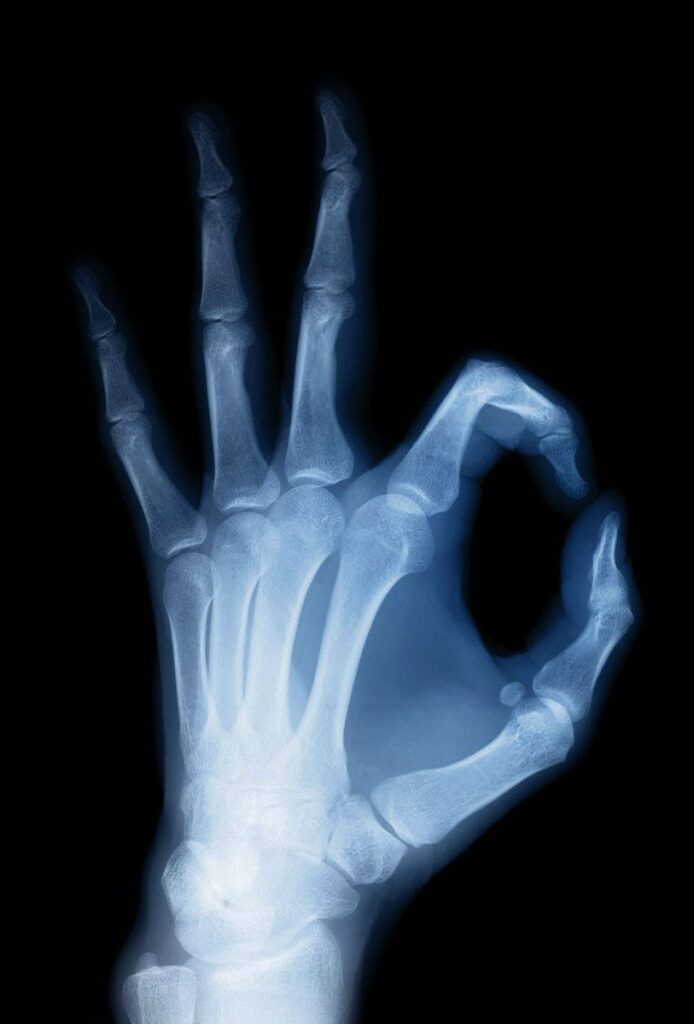
Are you still awake? Okay, I know that was super boring to read. Maybe I didn't need to include the whole thing, but I wanted to make sure I didn't leave out any details for the skeptics. To summarize, unless there are red flags found during the history and examination, getting x-rays immediately is unnecessary. Remember, x-rays only show bones. Unless you had a recent fall or other traumatic event, you didn't wake up with a broken back. There are other uncommon red flags that we are trained to evaluate for, and our comprehensive history and examination will determine if imaging is necessary.
"But, but, but!" you exclaim, as you push your spectacles up the bridge of your nose and furrow your brow, "these recommendations only discuss acute low back pain! What about neck pain, or other areas? Hmm?!" An astute observation, my inquisitive friend. Fortunately for you, there is an even longer, more boring research paper that discusses this at great length. And, yours truly has voraciously consumed even its finest details. Much of the recommendations remain the same. In the absence of trauma, history of cancer, infection, and severe neurological deficits, you do not need an x-ray to receive treatment. In fact, it can be counterproductive and expose you to unnecessary radiation, increase costs, and make you think your prognosis is worse than reality.
Myth 4: You'll Have to Come Back Forever
Every new patient appointment at Tidal Chiropractic includes a discussion of your diagnosis, treatment options, and the frequency and length of your treatment plan. By show of hands, how many of you have come into my office and I told you, "I'll need to see you twice a week forever." No one should be raising their hand. That's because by implementing rehabilitative exercise programs (as discussed in Myth 2) we want to give you the tools to self-manage and prevent injuries after completing your treatment program and getting discharged from care.
All treatment plans include a trial of care where we set a re-examination date to evaluate your progress. Your diagnosis will affect the length of time this requires, but in most cases, we will re-evaluate your progress in 8-12 sessions or every 30 days. We should be able to demonstrate measurable improvement at every re-examination. If we fail to make progress between exams, we are not going to keep repeating the same procedures. We will either order additional diagnostic testing or imaging, we will change our treatment, or if necessary, we will refer out to another provider to escalate the issue.
We keep meticulous statistics at our practice and currently, the patient visit average is 11.2. That means that on average, we see a patient fewer than 12 times before they complete their plan of care and we say "Sayonara." This includes patients with something like a simple muscle strain that only takes a few visits, as well as long-time patients who have been coming in for years for various ailments and injuries.
There's only one possible scenario where your treatment plan may have an indeterminate length: you have a chronic condition that cannot be cured and symptoms can be managed with periodic treatment. This may be something like degenerative arthritis, degenerative disc disease, or spinal stenosis. These conditions are not dangerous, but the underlying cause is not reversible, and you may have periodic flare-up of symptoms. In this case, your condition cannot be cured, but symptoms can be managed for periods of time. This is a situation where it is acceptable that your care may be ongoing simply for management of your symptoms. You are also free to come as much or as little as you like in this case, the frequency depends on your tolerance of symptoms.
Myth 5: Getting Adjusted is Dangerous
There is no medical procedure without risks, however I honestly believe that chiropractic care is one of the safest medical procedures you can undertake. The risks of a chiropractic visit, as stated by my malpractice insurance carrier, are the following:
Including, but not limited to: muscle spasms, aggravating and/or temporary increase in symptoms, lack of improvement of symptoms, burns from electrical stimulation and from hot or cold therapies, including, but not limited to, hot packs and ice, fractures (broken bones), disc injuries, strokes, dislocations, strains, and sprains.
The vast majority of chiropractic patients will never experience any of these adverse effects. There may be the uncommon exception of "muscle spasms, aggravating and/or temporary increase in symptoms, or lack of improvement of symptoms," which I consider a mild adverse reaction that does not have any long-lasting effect.
The one adverse reaction listed above that seems to draw the most scrutiny and attention is the possible association between stroke and cervical chiropractic adjustments. You may or may not have seen articles in the news that have described a chiropractic patient attending a routine treatment only to suffer a stroke. The article seems to often associate a causation between the patient getting their neck adjusted and the stroke that they subsequently suffer.
The research states that association between a cerebral artery dissection and a chiropractic cervical manipulation ranges from between one to two out of 100,000 to one in 1 million. there are many doctors who have done extensive research on this topic and have found over and over again no direct correlation between chiropractic adjustments and cerebral artery section resulting in a stroke.
Often times the patient is already undergoing a stroke and may have symptoms such as neck, pain, headaches, and dizziness. The symptoms may prompt a patient to seek the services of a chiropractor. At this point, any movement of the head or neck may now prompt worse symptoms. We are trained to detect the red flag symptoms of a stroke in progress during our exam, which would prompt us to immediate call for an emergency referral. The rate of them suffering a stroke at the chiropractor is equal to the rate of them, suffering a stroke at their medical doctor or even barber or hair salon due to any movement of the head and neck. Meanwhile, there have been multiple reported incidents of soccer players heading balls that directly lead to causing a stroke.
Another interesting piece of evidence that supports the low risk of chiropractic care is the rate and cost of malpractice claims in chiropractic versus medical malpractice. According to a report by the National Practitioner Data Bank, medical doctors are more than twice as likely to experience malpractice claims compared to chiropractors. In addition, the cost of chiropractic malpractice ranges from $1,000 to about $3,000 per year compared to $10,000 to over $200,000 for certain medical specialties. This highlights the relative safety of chiropractic compared to other types of medical care.
What Have We Learned?
Hopefully, this article has highlighted some uncovered some important misconceptions regarding chiropractic. You can now see that chiropractic care provides multiple techniques to deliver a safe, effective treatment for musculoskeletal complaints in any area of the body in a relatively short period of time. As always, if you have any other questions or concerns regarding things you may have heard about chiropractic care that you need cleared up, reach out to our office and we’d be happy to help.
